Subtitles for Memoirs I Won’t Write

Subtitles for Memoirs I Won’t Write

When I’m not working on memoir or essays, I find relief in the works of nonfiction I *don’t* have to write.  I’ve accumulated a list of subtitles for memoirs I won’t be writing. I challenge you to write the subtitle for a memoir you won’t write, and leave it in the blog comments or on my Facebook page. I’ll wait until Monday or so and give the one that makes me laugh the loudest a signed copy of Opa Nobody (or Cover Me if you want that instead). Here’s the catch: since it’s nonfiction, it has to technically be true. So even though you won’t be writing the memoir, the subtitle should refer to your real life.

My Subtitles…..

: The Chronicle of a Life in Which Julia Child Has Played No Discernible Role

: A Memoir in Memoirs

: A Year of Reading Anti-Memoirs and Coming to the Conclusion That They’re Basically Self-Hating Memoirs

: My Life with the Thrill Kill Kult–Oh, Wait, That Wasn’t Me

: No She Didn’t

: How to Try in Various Fields without Really Succeeding

: A Memoir of Moderation

: One Midwestern Nerdy Bitch’s Crazy Story

: Three Not-So-Nice Verbs and How I Do Them

: Good Thing I’ve Got it all Figured Out Now

: A Graphic Novel In Which People Just Sit on Couches Holding Books Because That’s Basically What I Do

: Dr. Spock to Dr. Sears In Two Generations with Colic

: Things That will Freak You Out

: Things That Have Totally Freaked Me Out Every Day of My Entire Life

: By Which I Mean: Awesome!

: Libraries I’ve Torn Through Like the She-Beast I Am

: A Year of Whining

: My Bond with Used Nissan Vehicles that Couldn’t Be Killed

: I’ll Forward You the Link

: A Meditation on Superballs: I Mean Real Superballs, the Kind in the Vending Machines; Don’t Be Crude

: I Saw it On Facebook Somewhere

: Pedagogy as Gleaned from Facebook Links

: Craft Supplies I Have Neglected and Under-utilized But Cannot Part With Because That Would Mean Confronting My Failure to Craft


Breaking Up with the Fictional Self

Breaking Up with the Fictional Self

My fictional selves are like Charlie’s Angels or intergalactic ninjas. They get so much done while wearing silver lamé bodysuits.

Actually, there’s no version of me that looks right in that kind of an outfit, but I make up these women–and then they irritate me. I’m so not a superhero.

A few days ago I sat at my desk, decidedly un-silver-lamé, pretty much wrecked by 2 pm. My hands hurt. My neck muscles knotted up. My elbows and shoulders throbbed. The joints in my toes stung. But I didn’t even take physical inventory; I didn’t have that much sympathy for myself. I wanted vengeance. Me and myself were going to have a little snit with each other. I looked at the little clock in the upper-right-hand corner of my computer’s screen and thought, Three hours. You’re wasting three hours. Three years ago, that would have been a fresh half a day, an oasis. Programs would have been designed, proposals and essays written, projects cracked open.

Remember that fantasy caffeinated self? I saw a glimpse of her silver cape as she sped by outside my window.

Up until three years ago, I had been relatively lucky, health-wise. Then after a thyroid problem, the symptoms of rheumatoid disease exploded full-bore, and I gradually pieced together my diagnosis: an auto-immune disease that attacks the joints and in general messes with things. Before that point, I had thirty-nine years of thougtless and lovely mobility. They were wonderful, and I am so lucky I had them. Still, today, I have some good days–most days I do have a lot of mobility, and some days I have almost all. I do still have days of 90 percent mobility, but I don’t take them for granted.

It’s been three years, and three years would seem like long enough to get used to a new situation, but my mind and my body both struggle with the burden of the other people we used to be.

I recently finished reading Emily Rapp’s Poster Child, about the experience and effects of a birth defect that limited her mobility, requiring a foot amputation and multiple prostheses. She includes a vivid explanation of phantom limb syndrome, the effect of a mind that has already mapped its body and continues to signal the emergency of a missing appendage.

Rapp explores deeply the effects of this challenge on her sense of self, how it changed every experience, creating new adaptations and permutations. She writes honestly instead of aiming to create a fantasy of unreachable saintliness. She doesn’t push the “learning” and the “peace” of her experience, because it doesn’t end.

She also writes about the effect of constantly imagining the other versions of her life, the what-if bodies, the alternate universes in which she had two symmetrical legs.

So–my disease is not at all crippling. And I’ve had years–decades–to take my body for granted. That past of taking myself for granted has birthed the silver-lamé superstars. I still want a body I can take for granted, a body I can push, a body–the body of a twenty-year-old, I suppose–that occasionally needs sleep and food but bounces back stronger after a glass of water and a donut.

If you have a brain then you’re constantly imagining, so I think it’s unrealistic for me to tell myself to “stop it” and to forget about what it felt like to be pain free. I will probably have longing toward those other bodies, how it felt to be them, for a while. Maybe for the rest of my life. I suppose that’s normal. At the same time, this phantom body syndrome, the fantasy version of myself, can easily take over if I let it. It’s a video game of shame in which this body, the one I have, always ends up losing, judged as inadequate. I can’t help but imagine a paradise in which I would get everything done that I felt I needed to do.

Those silver lamé women are fantasies, a kind of efficiency porn, two-dimensional bodies. They’re not real. One of the ways I’m working on living with this disease is to shake my head and try to clear my eyes of the flashes of silver, and I have to first name them, to realize they exist, that they flit through my vision when I’m frustrated, when like a little kid I want to throw down my purse and my keys and swear. I suppose everyone has to contend with these former bodies in some form as they age and their bodies change. My break-up with my phantom selves is happening faster, sooner, so maybe I’m getting a challenge done that other people have to face later. Yeah, I like that: check it off the to-do list. That’s another fantasy, but it’s one that’s slightly more realistic.

And I have to remember that I have strange and powerful mental silver-lamé abilities, and I believe in powers that develop to compensate for others that wither. I have to imagine new superheros: that on bad days I can wield my metal cane to trip ninjas. As I squint for my close-up, the thoughts and ideas I have are sometimes foggier, but sometimes the plans I hatch are brilliant.

————-

This is for a “blog carnival” about “How Do You Prevent the Disease from Taking Over?” from a prompt by Kelly Young, whose blog RA Warrior is an essential part of the rheumatoid community.

Next Big Things

Next Big Things

Laura Valeri (fictionista extraordinaire and my wonderful former colleague at Georgia Southern University, author of the beautiful book The Kind of Things Saints Do and the forthcoming linked story collection, Safe in Your Head) asked me to participate in a blog-tagging thing called “The Next Big Thing.” Basically, I get to answer these questions and then tag five writers who I think are the Next Big Thing. Very cool!

Let me first talk a little about Laura. Back when I was teaching at GSU, her office had been the office of Peter Christopher, a colleague of mine at GSU who passed away. Good vibes. I’d stop in from time to time to get a sanity check-up and to hear about Laura’s novel, in progress, which at the time involved an epic imagining of the Epic of Gilgamesh. And she and her lovely partner Joel had this house on a marsh in Savannah that was just like how you’d picture it, with crabs in the water and a little boat. Their house was filled with all the wonders of the natural world, from crystals to cool rocks to preserved alligator heads. Or crocodile. I can never tell the difference.

What is the title of your book?

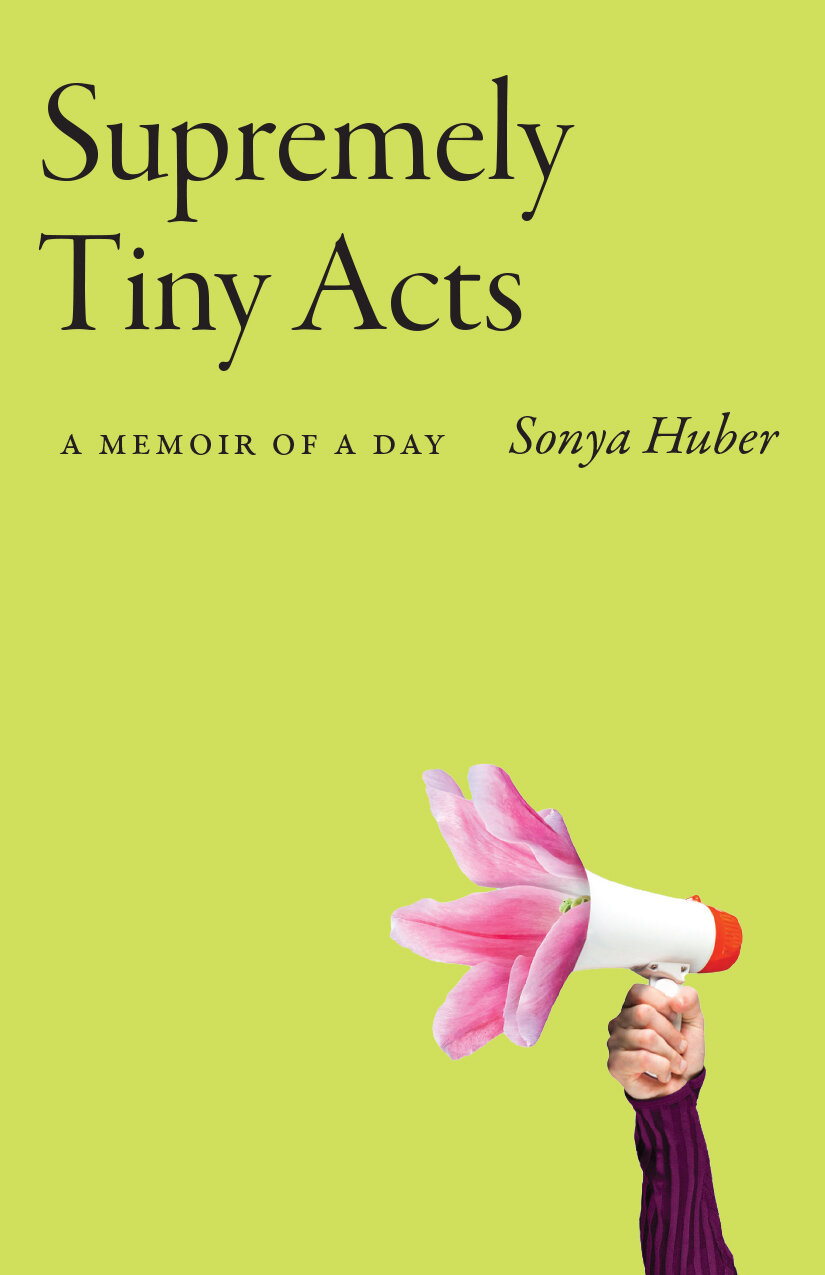
OKAY. So I’m doing this based on my book Opa Nobody, which is about to be released from University of Nebraska Press in paperback in Jan. 2013! This month!

huber-final-cover.jpg

What is the one-sentence synopsis of your book?

Young activist woman goes in search of inspiration and tries to recreate and understand the life of her dead anti-Nazi activist German grandfather.

What genre does your book fall under?

That’s a weird one. I say it’s creative nonfiction to make things easier, but because the book has imagined scenes (I take pains over and over again to say, “I imagine….”) I would put it technically under the mixed-genre heading. University of Nebraska didn’t categorize it at all, which I think was smart.

Where did the idea come from for the book?

My mom went to a funeral in Germany when I was around 30, and she came back with tantalizing snippets of stories. One was, “Your great grandfather hung a red flag from a mountainside.” I don’t really know what this means, but as I was a leftie labor activist at the time volunteering with Jobs with Justice, it gave me a thread to start pulling on. I began with questioning my mom and I slowly began to understand that he was a miner and a socialist activist. I didn’t even know then that Germany had, in the period between World War I and World War II (called the Weimar period) been broken up into several independent soviet-like free republics run by workers’ councils. It was an amazing period we never learn about in school here in the U.S. At the time I was exhausting myself with my activism, and as I began to learn about this story, I began to wonder about generations of activists. I wanted an elder to help sustain me and encourage me, and I had this fantasy initially that my great-grandfather the miner activist was an encouraging mentor to my grandfather the clerk-socialist activist. The reality was true and also much more complicated.

How long did it take you to write the first draft of the manuscript?
I don’t even think there was a first draft. There was a mountain of paragraphs that gradually came into shape, and that took a very long time. The entire book was started as an idea in 2001 and submitted to Nebraska in 2006.

Who or what inspired you to write this book? 

My mom, ultimately. She was the link to all these stories, and I was also always troubled by her relationship with her dad. She felt very left out of his activist life, and I wanted to understand why that had happened. I guess I wanted to explain Germany history to myself to see how my family fit into it and to understand the forces that had affected my mom.

Will your book be self-published or represented by an agency?

University of Nebraska Press, which rocks.

What other works would you compare this book to within your genre?

I see it as somehow connected to the mixed-genre work of Maxine Hong Kingston, particularly China Men.

What actors would you choose to play the part of your characters in a movie rendition?

This is a crazy question I have never thought about. I would only hope Janeane Garofolo would play me. That would make my life. I will have to think about who would play my grandfather. Hmmm…..

What else about your book might pique the reader’s interest?

It’s about Germany and it contains a ton of German history nobody talks about, including the wide range of left-wing resistance to Hitler, and also a bit of the story of how Germans struggled to rebuild their country after the war. But it’s also about the left in the United States, my tour of duty through every little group I could find, and the struggle I had and have to be a mom and a writer while being an activist–that’s the burning question at the heart of this book. How do you do both?

xoxoxo

Sonya

P.S.: here are my tags for five (okay, six–I cheated) writers who are the NEXT BIG THING!

Author of Teaching in the TerrordomeHeather Kirn Lanier

Author of Looking for Esperanza: Adriana Páramo

Author of American Afterlife… Kate Sweeney

Author of Steam Laundry (poetry)… Nicole Stellon O’Donnell

Author of Use Your Words (a writing guide) and Ready for Air: A Journey Through Premature Motherhood: Kate Hopper

Author of The Radical HousewifeShannon Drury

I didn’t mean to do this, but I have chosen nonfiction writer mamas as my theme! Read these excellent books and enjoy.

How to publish your book

How to publish your book

IMG_1743I am gratified in a hopeless kind of way whenever I get asked questions about books and publishing, because it is very nice that the person asking might believe I could answer such questions. So I wrote this long series of lists as a response, because I am very bad at answering this question, for reasons you will learn shortly.

Question 1: How Do I Get My Book Published?

1)    This is an agonizing question, because the next sentence out of the questioner’s mouth might be, “I just need a proofreader and someone to help me organize it.” I wish I had the answer because I SO ABSOLUTELY DO NOT. Someone might, but then again, if they promise to make you happy in that way so quickly, I’d be a little suspicious.

2)    I’m trying to figure out and express exactly why the question is so agonizing. I think it boils down to my own inadequacy. Here’s my batting average (for real). About 1 hour a day since I was 23, minus the weekends and sick days. So we’ll say 5 days a week, 18 years… that’s 52 x 5 x 18 (at the bare minimum)=4680 hours. If I add in a few half hours here and there and a bunch of manic proofreading and revisioning, it’s close to 8,000 hours pretty easily (not to mention reading time, which should be added in, I suppose). That is a lot of waking time of life. To show for it, I have 3 books. And I can only tell you that I have no idea how to write a book, much less how to publish one.

3)    If I tell you it’s impossible, you might be sad. I don’t want to make you sad. It’s not impossible; it’s just not something I have a map for.

4)    Maybe you did just spit that book out and are on the way to getting published (somehow) and you obviously don’t need my help. Who am I to say? But you’re looking for a trapdoor—a magic escape hatch—that I don’t know about. I really don’t know about that escape hatch. So I can’t even begin to tell you how much you are asking the wrong person.

Question 2: How Do I Write a Book?

1)    This is overwhelming to a writing teacher because it implies that the process of writing a book is simple. If it were simple, you could find the person who can give you the simple magic recipe. I’m sure someone’s trying to hawk that, but it’s like weight loss. The simple and drastic formulas are probably really bad for you and produce bad books.

2)    This is overwhelming to a writing teacher (me) because it reminds me of how non-simple my writing process is and of how much time I put in (an hour a day, kids) to accumulate sentences that sometimes get thrown away. Okay, they get thrown away a lot. Or sometimes I write whole chapters and then brood on them for the next five years, split them in two, use one paragraph, and throw the rest out.

3)    If you saw a welder working and said to the welder, “I want to build a battle ship,” what would his response be? He would sigh and say, “Okay. Maybe you should learn to weld first.” The obvious next thing is to say, Just write your book. Or just find an MFA program. And I hate myself for giving that kind of flippant advice.

4)    I get the feeling you’re not asking the right question (see the next chunk). And I don’t want to be all “Mr. Miagi,” but at this stage of the game I have the feeling you haven’t struggled enough. I want to tell you to go away for a year and write every day for an hour and then come back and we’ll talk.

5)    I do have some good practical advice: find 20 books that are like the one you envision (but of course not as good). Read them, and then write notes for each to describe how your book is different. This is your process of getting educated in the market that you are writing for.

6)    Look for writers’ conferences that are near you and go to one. You can find writers conferences by looking them up at Poets & Writers at www.pw.org.

7)    Just start looking. Look at websites like Poets & Writers or Writers Digest and subscribe to one of these magazines. You will see just how many people have this same desire and will gradually learn about what kind of book you want to write for what audience.

8)    Forgive me for being so inadequate a guide to something you care about so deeply.

9)    You can hire me for a standard contractor’s rate if I have time in my schedule, or I might be able to refer you to someone else who does editing and consultation. It’s really hard to know whether or not you should pay someone for these services. If you really care about writing, you should learn yourself. But ultimately I think you will have to pay a teacher. That’s how I learned, so I don’t know another way. It’s disrespectful of another person, however, to ask them to do something huge for you over an extended period of time without compensation.

10) Writing is seen as “easy” in our particular cultural moment. It’s not respected. That’s why it’s not given the support and focus necessarily in schools. We think someone else should teach writing, that it’s as simple and direct as downloading some instructions like on The Matrix. Learning and doing writing takes time and attention and concentration, like anything. Many writers have subsisted for years on sub-standard teaching gigs that don’t offer health insurance, or freelance writing and editing gigs with the same deficiencies. When you ask a writer for free advice, you’re liable to tap into this frustration (understandable, I think) of a person with under-valued skills who is short on time because he or she is busy juggling multiple gigs to pay the health insurance premium.

Question 3: How Do I Write MY Book?

1)    What kind of book is it—Fiction or Nonfiction or some other genre?

2)    How long have you been writing it? Do you think you have enough gathered material to be interesting to someone?

3)    What kind of reader do you think it would appeal to? If you think the whole world should and will read it, you need to think a bit more and be realistic. I hope the whole world will read it, but… take the Bible. It’s very big in these parts, and yet not everyone has read it. I’m sure everyone would get something out of your book if they found it and read it, but who is the core group of readers who will be immediately moved on hearing about this book to rush out and grab it?

4)    I don’t know. It’s your book. Really. There’s no recipe. If you have an even more specific question, like “How Do I Order These Essays Into an Essay Collection,” I could maybe help with that. But I don’t know what kind of book you want to write—it’s a deeply personal question, and you should be suspicious and wary of handing your writing autonomy over to anyone else.

5)    Have you let someone else read it? You should. Find someone who will ask good questions and not just say, “Oh honey, it’s greeeaaatt!” You would be surprised—or maybe not—that most books are written for a general readership, and therefore that anyone who likes to read can give you really great advice. My mom is a master at this; she’s a great reader.

6)    Have you attended one measly writing class? I’m not saying you need one. I’m just saying that there’s always a take-away that can help you, and writing classes are always good places to find writer friends. I don’t even mean jumping into an MFA. Try a community education center, a YMCA class, something you find in the classifieds ads, a retreat, an online course–anything.

7)    Have you thought about forming a writing group?

8)    If you can answer these questions, make a friend with a writer who works in the same genre you are writing in. I would bet they are not rich. Be respectful and know that, just as you pay a plumber for his services, you should offer to pay a writer on an hourly basis for his time.  If you’re a student, you’re entitled to this advice as a result of your tuition, but you will need to set up an independent study. Be very specific when you ask the question so they know what you’re talking about and they can tell you’re beyond the stage of over-simplifying this complicated question.

Question 4: Are you asking me how I became a writer?

1)    I wrote every day for an hour on the subway to and from work in Boston, and then I kept writing and I wrote a bad novel. Then I was hooked into it, and I subscribed to Poets & Writers Magazine, read it diligently, learned about writing and the writing and publishing industry, and sent my work out to many small and large magazines and anthologies. I gradually got published in small magazines and anthologies and got rejected a lot. It took a loooooonnnnnggggg time. it took an astounding amount of patience and still does.

2)    I took community education courses on every writing subject: how to write a book proposal, how to write poetry, etc. These were just what was offered that I could find listed in the newspaper next to the bird-watching group and the classified ads for casual sex. Don’t be proud. Your teachers are everywhere. You don’t need to find Michael Creighton or Oprah and hold a gun to their necks. You need to listen to everyone.

3)    I worked at a bookstore that sold books, and I diligently used my employee discount to buy the entire “how to write” section in the basement used-book section. I read them all. I’m serious. It’s very good for you. Do it. This was so good for me. Annie Dillard’s The Writing Life, Anne Lamott’s Bird by Bird, John Gardner’s The Art of Fiction, Julia Cameron’s The Artist’s Way. They were my best friends.

4)    Then I worked in journalism. Excellent training and excellent way to become a writer. I was paid badly and freelanced, but you get to keep the skills when you’re done. Then I got an MFA. Now I teach at an MFA program. I’m a fan of them.

5)    I wrote so much bad, bad stuff. I still do, and then I sit and revise. That’s the only difference: the amount of time you are willing to put in to revision. If you are brilliant on a first draft, you should not be asking me for advice, because I don’t know what it’s like to live the life of a savant and I would not be the one to guide you. I am what they call a “grind.”

Question 5: How do I get an agent?

1)    I have no idea. I have published three books and I’ve never been able to get an agent. I’ve never been able to say the seventh favorite sentence of writers: “I fired my agent,” which gives writers a feeling that they are in control of something financial. Writers also like to say “My agent” because it gives them the feeling of being the boss of someone, or at least on someone’s t-ball team. I like agents. Agents I have emailed have been really nice to me and really interested in my work, but I feel about them the way I felt about boys at age 14: This is never going to happen to me and I’m going to be a virgin forever. Except there’s no urgency there at all. It’s sort of the way I feel about the band Guided by Voices. People have been telling me forever that I should love them, and at this point another version of me in another universe probably does. But I’m sort of too lazy to listen to them now.

2)    Move to New York and get a job at a Starbucks in the neighborhood where several literary agencies are located. Work at a magazine like Glamour or More and wear cool boots and carry a quirky handbag. Someone at a bar will tell you how much she likes them, you will start chatting a reveal that you are a writer, and then you will have a business card. You will set up a face-to-face meeting with the agent, who will like your writing sample as well as your quirky handbag, and ouila, agent. (This is my agent-porn fantasy. I know it’s not real…. not all the time.)

3)    Start a blog. I’ve heard agents like these. Read a bunch of Poets & Writers articles about getting an agent. Seriously, I am the worst person to ask for this kind of advice.

My Top 10 Not-Necessarily-of-2012 Mostly Nonfiction Bests I Happened to Read This Year

My Top 10 Not-Necessarily-of-2012 Mostly Nonfiction Bests I Happened to Read This Year

I don’t get around to reading everything when it comes out. Who does? And I dislike the way the publishing industry forces everything into twelve-month packages and then a book is “done” after such a tiny life cycle. I feel rushed by all these lists and then I feel behind. I also don’t like the score-keeping where books get tracked and tallied based on the number of lists they make it onto, because top ten leaves out so much other stuff. So this is my top ten of what I’ve read this year, completely ignoring the books’ years of publication (though that’s provided for reference.) And the numbers are just the order in which I read them (roughly). I can’t believe there are four 2012 books on this list! One thing this list has taught me is that I’m actually reading current stuff, even though I feel like I’m mired in the past as I make my way through Montaigne’s essays (done, with scars to prove it) and Proust’s In Search of Lost Time (are you kidding? Nowhere close. A fun slog, though.) Anyway, the books I finished and loved this year:

1. The Status Syndrome: How Social Standing Affects Our Health and Longevity by Michael Marmot (2005). Sure it sounds wonky, but if the world has made facts like “being poor or poorer tends to kill you faster” sound wonky, then we clearly need more wonks and less fear of wonkiness. It pulls together an amazing amount of long-term data to show exactly how a small increase in status makes you live longer and vice versa. Marmot is not a disinterested research; he’s clearly incensed by this, and he tells you so.

2. Against Joie de Vivre by Phillip Lopate (2008). Essays: you think you know what an essay is? You have NO IDEA! Funny and smarter than all of us put together. Lopate is my hero. I’m also so proud that our books have at some point sat in the same warehouse at University of Nebraska Press.

2. Two or Three Things I Know for Sure by Dorothy Allison (1996). This memoir with snapshots is a meditation on cruelty, identity, class, the southeast, and gender. And it’s kind and searching and fierce. And you can carry it in your pocket.

3. Live Through This by Debra Gwartney (2011). A mom wrestles with her emotions and reactions to her daughters’ difficulties, among them running away for extended periods as teens. A self-implicating narrator you can’t help but love for her honesty.

4. Cornered: The New Monopoly Capitalism and the Economics of Destruction by Barry C. Lynn (2011). This book’s goal is pretty obvious from the title, but the method is very approachable case studies, mixing things you might know with interesting and pretty important economic background that I found very surprising.

5. Black Boy by Richard Wright (1945, 2007): Teaching this made me delve into the text in a new way. The book is sometimes called “angry”; I am astounded by how measured and calm it is. It’s gotten much attention for its subject matter and thus, as with much nonfiction, not as much attention as literature. At the level of the sentence this book is incredible.

6. Are You My Mother? by Alison Bechdel (2012), whose previous graphic memoir, Fun Home, was also incredible. This is better. I have a forthcoming review of it in Literary Mama, so I won’t rehash that here. She is so smart and provides a miraculous visual view of the composition process. Love love love. I want this to be on everyone’s “best books” list of 2012.

7. Looking for Esperanza by Adriana Páramo (2012, Benu Press). I’ve reviewed this at Riverteeth online. Buy it here. Bring her to your campus or book club. I’m a massive fan.

8.  Memoir: An Introduction by Thomas Couser (2011). I thought I was reading this in the search for something easy to assign for an intro class, but it’s much more than an introduction. It’s not a massive volume and it’s very approachable, but it delivers ideas from the UK-based perspective of “life writing” theory that counter and contextualize some of the semi-airless conversations about memoir in the U.S., which tend to be more driven by critics of the field and/or which revisit the same two questions (Are you lying? Can we lie?). Couser addresses those basic questions from a fresh and humane perspective and goes far beyond. My copy is underlined all up.

Sigh. Be still my heart.

9. Diaries, by George Orwell, ed. Peter Davidson (2012). I can’t lie. This was a teen-stalker gimme. I’m hopelessly in love with Orwell, and I’d happily read about him planting shrubs and tallying eggs. Christopher Hitchens writes in the Introduction that no one would want to read this all the way through. Except me.

10. The Pale King by David Foster Wallace (2012– Oh my gosh, another 2012. I guess I am totally obsessed with NOW) . I thought this was beautiful and expressive of the place that Wallace was tending toward later in life, so it’s different (and I think even better than) Infinite Jest. He was a true theorist of work and the Midwest. But it’s not finished, and that’s a weird experience. But if you’re into Wallace, you are probably okay with that anyway.

11. Gritos by Dagoberto Gilb (2004). He does amazing things with his voice, writing about the southwest, Mexican-American identity, Texas, work, academia, class, family, books and more, all without any pretension or any thought to “managing” an essayistic voice. He doesn’t hold back. A great collection. He writes a lot of fiction and I wish he wrote more essays.

Gratitudes

Gratitudes
Gratitudes

I’m heading off to a multi-family extravaganza, so this seems like a good time to focus on everything I’m grateful for. In no particular order:

Good arthritis meds and a good doctor who doesn’t think pain should be accepted as a natural part of a woman’s life. My health: all the things that aren’t wrong with me. Chiropractors and naturopaths–the fact that those things are covered by my health plan. My health plan (despite the fact that… okay, I could go on but this will not turn into a health insurance rant. Focus, Sonya! Gratitude.) I’m grateful Healthcare Now! called me for a donation last night, and grateful that people are selfless enough to sit near a phone and call down a list of names, all the invisible grind work of changing the world.

I’m grateful for my husband, a writer and hilariousness machine. He just got a piece accepted two minutes ago by The Rio Grande Review. I got to marry a writer who is also a nice, kind, funny, and strange-enough man. I’m grateful for every damn car accident and moment of frustration because I get to work it out with him. I’m beyond grateful, just a little in awe of the universe, that he came into our lives four years ago. I’m grateful for his family and his whole damn hometown, which treats us like we’re from there.

I’m grateful for literary magazines and literary blogs, the literary community, the people who write. Books. Yummy new books that are way better than you even expect them to be and then when you read them you feel less alone in the world. I’m grateful for my colleagues at Fairfield University. Mentors: Bill Roorbach (he’s got a new book out!), Lee Martin (he’s ALWAYS got a new book out!), and many others. Ohio State University, which allowed me to go to grad school without debt–TWICE! (I am not grateful for the “The,” it’s too cheesy). And my former colleagues, now friends and compadres, at Ashland University, for my friends from Georgia Southern, especially the AAUP activists.

It’s great, in general, when people get to know you enough over years that they know the ways in which you will freak out, and you know the ways in which they will freak out, and it’s just funny to everyone. Do you know what I mean? I love being known by my friends and not rejected for my secret recipe of anxiety and exuberance. I love being around people long enough to notice their patterns. I love being in touch with people I knew from high school, including the excellent poet Nicole Stellon O’Donnell. I can’t believe our constellation of farm towns produced two writers. I’m grateful my dad made up the word ex-huber-ance. I’m grateful for my relationship with my family members, alive and dead. I’m grateful for having been in enough pain at various points that I turned to writing, because look what I got: writing. Grateful for Buddhism, for the fellowship of friends and family of, for the Lois W.’s.

Grateful for my kid, my son. The reason for so much focus and work and… I can’t say enough. I’m grateful my child has a massive sense of humor.

Other things: sausage and wurst. Coffee. Tomboy dresses that feel like sweatshirts (they didn’t have those in the ’80s, did they?). Limes. Fish sauce and Frank’s Hot Sauce. The Midwest I miss, the Rust Belt. Clearance racks. Libraries and highways and the post office. Day care workers who have SAVED me. My old car. The kindness of strangers. People who know that meetings should be short and everyone should leave with something to do. I’d be a big big liar if I didn’t say I was grateful to therapists for their sheer practicality, the hardware store of the soul. Writing classes, writing workshops, writing groups. Bookstores, especially small and strangely-organized higgledy-piggledy independent ones where you run into stuff you didn’t knew existed.

Grateful to be 41, for the feeling I got starting at age 40, when people getting mad at me for stupid reasons began to seem a bit more ridiculous, when I became a bit less eager to please any random stranger, when the numbers 4 and 0 somehow made me feel mortal, and therefore that I had no time to waste, and therefore that I did not have to put up with meanness or waste my time with stuff that’s not worth my time.

And I could go on and on, I realize, but it’s time to write.

Biggest gratitude, or near the top of the list: time to write.

Hot Cripple and Affordable Care

Hot Cripple and Affordable Care

I had a few hours yesterday waiting in a doctor’s office (no bitching about that, my endocrinologist is a goddess) and so I got to finish “Hot Cripple” by Hogan Gorman (Penguin, 2012) which promises this story: “An incurable smart-ass takes on the health care system and lives to tell the tale.” How could I not read it? So I did.

I love that a book takes on social class and also uses the words “vajayjay” and “funner.” The one teeny issue I have with it is that I don’t think she actually writes much about the healthcare system. But I’ll get to that. And she is forgiven the title “Hot Cripple” because some kid called her that on the street as she was limping by.

First I want to say that I’m full of love for Gorman, who I don’t know, because our books appear to be kindred spirits in some way. I like that she took on an issue of social class and told tales that were hard for her to tell and that she made it funny. It’s way funnier than my book, with a consistent deadpan delivery that makes it feel like a one-woman monologue rather than a narrative. This makes sense, since Gorman is an actress and it started as a stage show. And we have the same cover design: Apparently when book cover designers see “woman” and “healthcare” in the write up they think “naked stock-photo chicks without heads.” But anyway.

Is it just me?

Gorman is a model-turned-actress, and she starts the book on full-steam “don’t hate me because I’m beautiful.” As a peasant-build swarthy woman, I found myself thinking, no, I never did want to work out that much, so I really don’t want to be you. This is a lot of the book’s hook: “Sex in the City” meets “Something That’s Never Ever On TV Except Maybe with Rosie O’Donnell or Archie Bunker.” The book is very New York and fashion centric, throwing around names of labels and drinks and so forth. Anyway.

Gorman was working as a cocktail waitress to support herself as she switched careers from modeling to acting. She got hit by a car in a horrific accident, suffered major trauma to the head, back, and everything else, and spent two years recovering. Holy smokes, it sounded excruciating. Despite the trauma, her funny voice carries the book. I enjoyed reading—and was stunned by—her growing awareness about what happens to people who suddenly can’t work. She’s honest about all of her self-loathing and crises of faith, and there are vulnerable moments immediately transformed into sarcasm.

Gorman was raised by a single mom, and I like that she includes details of living on the edge financially in her childhood. It helps me relate to her and gives the book some depth. But I had two major issues with the book that actually made me squirm, all snark aside.

First—and biggest. Gorman is actually SAVED by the Social Security safety net. That is the meat of this book. It’s not actually much about healthcare at all despite moments of mooning at sexy doctors and excruciating pain. Here’s what saves her: Social Security Disability (which she gets), food stamps (which work for her even though it is not enough to feed one’s self with), Medicaid, and the no-fault law in New York which provides some funding for pedestrians hit by vehicles. She has battles with all of these government offices, but she gets her benefits and struggles to adjust.
Then she is basically abused by the legal system. She has a crazy judge, gets a settlement, but it’s not anything to make her rich. Again, the legal system around car accidents is not healthcare. Healthcare is doctors and nurses and other practitioners curing people. Health Insurance is that cesspool that the practitioners and patients have to wade through to do their jobs.

This is a huge misunderstanding. The battles about the Affordable Care Act (maybe you’ve heard about the recent Supreme Court thing)—and some people’s hatred of the act—might have something to do with this massive confusion. Maybe people mush all this “helpy” stuff together. Maybe they think if they strike down the ACA, they would be getting people off food stamps. I think the confusion in Gorman’s book—and the fact that a major publisher, Penguin, would make no move to correct it—indicates pretty obvious cluelessness about what is and is not healthcare.

One of the things Gorman is angry about is that it takes her months and months to find Medicaid and other social services; she wonders why there “isn’t any communication between these government agencies and the general public?” (p. 170). I think this is a big issue with people who either hang out with or identify as privileged. Gorman has a huge issue with asking for help; she mentions more than once that she never does it. She never talks to a hospital social worker or a chaplain, who would have immediately steered her in the right direction. She has apparently never had a friend or acquaintance who admitted to being on any of these services. The government has wisely decided not to focus its outreach materials about Medicaid on the cocktail bars of Manhattan.

The contribution of her book is that she’s breaking silence about the shame of social class issues, even though her inability to do so at the time prolonged her agony. Obviously, this is much harder and more traumatic for people who are identified with their class situation as a part of their identity.

This leads to my second biggest issue, and the only place where I felt like Gorman was shading the truth either in one direction or another. It’s a throwaway moment at the beginning of the book: she says she didn’t have insurance because she “couldn’t afford it.” She gives enough class markers to let us know that she was maintaining her Louboutin lifestyle with consignment store shopping, but she doesn’t give the dirt: did she actually LOOK for insurance, or did she blithely assume she wouldn’t need it? If she assumed she wouldn’t need it, she made a dumb innocent mistake and I want her to own it and move on, because that makes her part of a huge group of youngish people who shouldn’t (I think) have to wade through a confusing system that will ultimately just screw them anyway. But without insurance, how does she get birth control, etc.? Inquiring minds like me want to know that stuff. Health insurance questions, especially for young women, immediately lead to lots of real questions about bodies and choices, and I want to know. Because she doesn’t tell me, I don’t get the benefit of understanding what her story really means. Is she clueless, or is she shut out of affording even a catastrophic plan because of her cocktail waitress take-home pay? Either story is important.

UPDATED (and most important): Gorman didn’t ask, so she didn’t know that 1) Emergency rooms DO have to treat you regardless of ability to pay (it’s the law, and it was the law way before the Affordable Care Act, and 2) If you get treatment, GO TO THE HOSPITAL BILLING OFFICE. Those folks will evaluate your ability to pay and give you a rate to pay and often put you on an interest-free payment plan.

There are two tacked-on sections at the end where she gives readers an overview of the ACA, and says that she still doesn’t have insurance because she now has massive pre-existing conditions, and the ACA would forbid that discrimination. The research chunk doesn’t sound like her voice. The personal experience after the book about still not having insurance…That’s the book I want to read, and that’s the healthcare system.

Then there’s a section where someone gives her a free first-class ticket to India and she goes and has insights at a meditation retreat about sharing her story and that she’s at peace with what happened. I didn’t like that, and I am restraining myself from writing more. I don’t like (okay, I loathe) the Eat-Pray-Love spiritual colonialism of going to a Third World nation to get enlightenment and then coming back to make this into a product to sell to people. This would launch me into an Eat-Pray-Love diatribe, and since I hate it when reviewers go off on tangents that aren’t central to the books, I will not do it.

Big picture: the good news is that the ACA is intact for now, but there are many cracks through which people without insurance will continue to fall. It’s a complicated, un-integrated system. Healthcare is still private. And Gorman got saved by the public sector.

Newsweek says chronic conditions too expensive

Newsweek says chronic conditions too expensive

In the Newsweek of May 14, 2012, Kent Sepkowitz wrote an article entitled “Equine Opportunity? It’s Time to Face the Facts on Expensive Medical Treatment” in which he argues that people like me should be left to die. I’m not sure if he wants us to die, but he says that “as a society we cannot afford” treatment for people like me. Maybe he wants us all to go to Canada.

He isn’t taking on cancer, or end-stage life support, or long-term hospitalization. Instead, he’s taking on chronic illness like MS (the headline comes from Ann Romney’s passion for horseback riding, which she credits with keeping her active despite her MS).  Egregiously, Sepkowitz includes the cost of dressage horses as part of the implicit total in treating chronic illness. These funny-sounding disease names are mysterious because the public doesn’t know what these various conditions really mean. So they’re easier to pick on.

His real point, however, is that “[d]rugs with unwieldy names” are too expensive. Wow, they cost $30,000 to $40,000 a year. I don’t know if that is equal to the mortgage payment on Sepkowitz’s second home, but it’s too much to keep someone with a chronic condition alive. That amount–let’s say $35,000, or $2916 a month–is not too much to keep someone alive and functioning.

I could argue this from a moral standpoint, but this article seems to have throw that stance out the window. Instead, let me argue for my own financial worth. I am not yet on drugs that cost $2916 a month, but I could very well be. I have rheumatoid arthritis, and those immuno-suppressive drugs cost just as much as the immuno-suppressive drugs used to treat MS. I am the primary breadwinner in my family, and I have spent a good chunk of time not only paying my own expenses but raising a child. I’m a caretaker, so in addition to having paid into Social Security since I was 16, I am contributing to the care of others. I’m a teacher. I plan to have a long and productive career. Maybe that’s being extravagant. But I think my life is worth $2916 a month, especially since that cost is big, big money to pharmaceutical companies getting rich off that drug and to insurance companies doling out that treatment in tiny increments with hefty co-pays and premiums that I shoulder.

Yes, I’m productive, and the Newsweek article (under the heading “Health” instead of “Political Screeds”) is accompanied by a graphic of an elderly woman in a walker and hospital gown. I’m not there yet. I would like elderly people and middle-aged people with chronic conditions to be able to live productive lives.

Here’s another issue, Mr. Sepkowitz: If you stop treating people like me, we don’t die fast. Instead, we die excruciatingly slow and painful deaths that will require expensive hospitalization and long-term disability. I would go from being a productive worker to a drain on your spreadsheets. I’d go to the emergency room and beg for pain pills. I might even get addicted to them. My family would fall apart. Someone would have to take care of my son. Someone would have to pay my bills. You’d have to institutionalize me for a looooong time before I’d finally kick it, and then more expensive sick people would take my place.

Sepkowitz doesn’t know it, but the real problem is the private healthcare system that allows these drugs to be sold for outrageous profits. But then, he might know someone who has shares in a pharmaceutical company, someone whose stock options might total much more than the cost of keeping a handful of people alive. But they’re not rich and powerful, so I suppose they’re too expensive.

If you have a chronic condition that requires a drug with an “unwieldy name,” (unlike a decongestant?!?) or if you love someone who has one, please contact Newsweek: letters@newsweek.com.

What Memoir Means Beyond Me

What Memoir Means Beyond Me

A memoirist’s work these days can often involve reading statements about the badness, self-centered, or non-artistic nature of our work. Do you need me to provide links? There are many, but Neil Genzlinger‘s article, “The Problem with Memoirs,” in the New York Times, seems to sum it up. These are different than controversies over the truthiness of a particular memoir or piece of literary nonfiction, because the specific controversies often delve deeply into the works themselves and talk about them. That deep delving and reading and discussing is almost always a very productive thing, even if nothing about the nature of truthiness gets resolved. (How could it?) In any case, the challenge with the controversies is not the controversies themselves. It is that the controversies are then used by others as logs on the fire to attempt to burn memoir as a genre. (My metaphor kind of got away from me. It’s not actually that Joan-of-Arc-ish, but you know what I mean).

Granted, I probably shouldn’t take these statements personally. They usually betray both a lack of understanding about the scope of the genre itself as well as a lack of reading in the genre. The statements sadden me because they remind me of how much great and beautiful writing is lumped into a term, and how that term itself is then used to excuse not investigating the genre further.

For that reason, I am always delighted to collect proof from the outside world about the contributions that memoir can make.  Well, the outside world constantly delivers that proof in terms of readers and a great community of supportive writers. Maybe I also hunger for support from the “inside” world–academics doing “official” things and studying reality with a bit of distance. And that’s why I get happy when both literary folks and history folks in particular talk about the value of memoir.

This came my way today via Inside Higher Ed: Dr. G. Thomas Couser of Hofstra University writes:

In American literary history, memoir has long functioned as the threshold genre through which various minorities and marginalized populations have gained access to the realm of literature.  Consider the antebellum slave narrative, which first empowered African Americans to tell their lives. In the late twentieth century, memoir surges have tracked successive rights movements: the Civil Rights movement, the women’s liberation movement, the gay rights movement, and the disability rights movement. Of these, the last most vividly illustrates the genre’s accessibility; in recent years memoir has issued from people whose conditions were once believed to utterly preclude self-representation–locked-in syndrome, Down syndrome, autism, and early Alzheimer’s.

Of course, as its critics claim, much memoir is self-aggrandizing, trashy, and not worth your time. But before you dismiss memoir in its entirety, remember that it has served historically–and still functions–to make visible lives that once were lived in the shadows–or were considered not worth living, let alone writing.

I think Couser’s point is central to the problem with memoirs. Many of them irritate critics precisely because their content and the lives they describe also irritate notions of the status quo.

But as a collector of these various clips of academic friends telling us we exist, I would be remiss if I made it sound as thought the excellent Dr. Couser was alone. I also read and loved a book by historian Jennifer Jensen Wallach, Closer to the Truth Than Any Fact: Memoir, Memory, and Jim Crow, that you can read if you ever get sad about doing your work for nothing. One of her huge points is the validity of using memoir as historical documentation for studying a particular time period.

She writes:

“Skillful autobiographers are uniquely equipped to describe the entire universe as it appeared from an acknowledged perspective. Skillfully executed life writing has the ability to portray the complicated interplay between thoughts and emotions of a historical actor. Furthermore, autobiographers intermingle historical data about what actually happened with reflections on what the author wishes had happened or imagines had happened. A full-fledged understanding of a particular historical moment must capture the complexities of the cognitive and the affective, the factual and the imaginary, perceptions and misperceptions. These elements are constitutive of a complex historical reality, which exists from the perspective of the people who inhabited a past social world. The thought and feelings of historical agents are not responses to a preexisting social reality. Rather, they are reality. If we are to come to a deep understanding of a historical moment, we must endeavor to understand the individual experiences that constituted it. No other single source of historical evidence can capture these intricacies as effectively as a literary memoir.” (4)

and also:

“Autobiographers frequently assume the role of lay sociologist and cultural critic, and they always function as a cultural anthropologist of sorts—for what are autobiographers if not participant-observers living their life with a critical eye and then reporting their findings later?” (5)

The idea of this book is to examine Jim Crow era autobiography but also to argue for the validity of memoir as a historian’s tool. I found the book completely by accident at a book fair, and I’m so glad I did.

I think we often focus on what memoir does for us–is it healing, is it fair to our subjects and the people depicted–and I think wrestling with those ethical difficulties is actually *part* of doing memoir work. But all the same, I like the idea of branching out of fields of study to see ourselves from the outside. If anyone has other examples of memoir as used in other fields of study, please let me know.